
1, 3 or 5 Panels? Choosing a Multi-Panel Canvas Layout
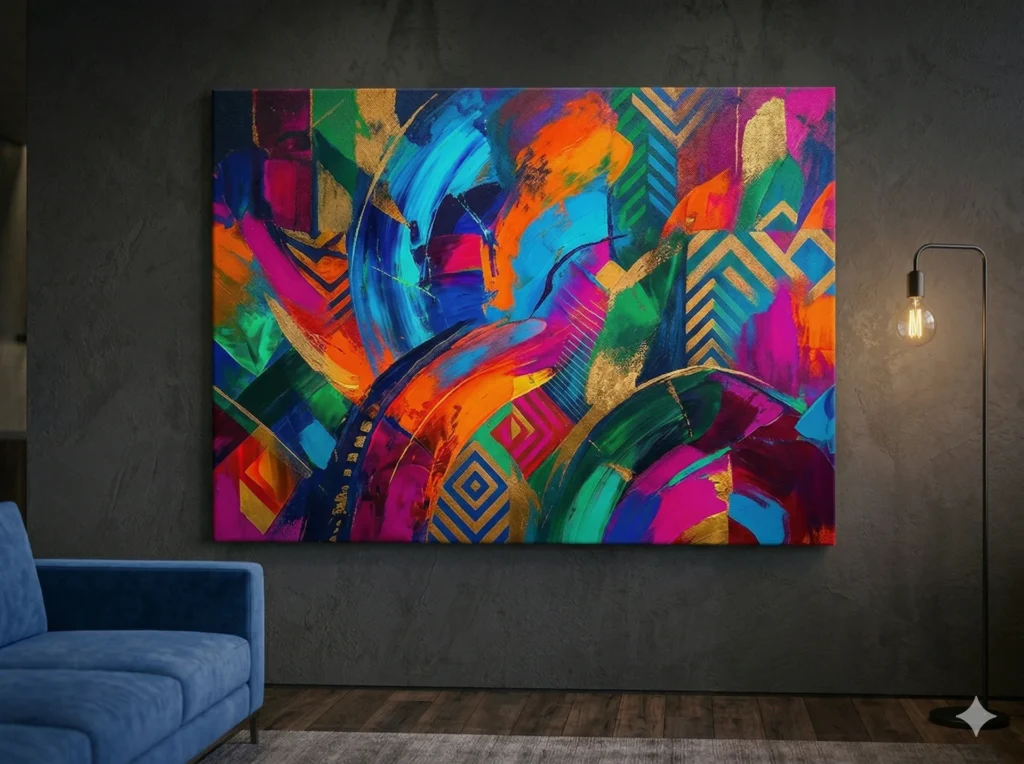
One image, one canvas - or one image spread across several panels with slim gaps between them? Multi-panel wall art (sometimes called a split canvas or polyptych) has a distinct look, and it isn’t just a bigger version of a single print. Here’s how the layouts differ, when each suits a wall, and how to hang them so they land.
The short answer
- A clean, focused statement → a single canvas, our most versatile option.
- Width, movement and a modern feel → a 3- or 5-panel set of one image split across the panels.
- The wider the wall, the more panels earn their place.
We offer both single-piece canvases and multi-panel sets, printed on the same materials and built the same way - the choice is about the effect you want, not the quality.
How a multi-panel canvas actually works
A multi-panel set takes one image and divides it across several separately stretched canvases, hung with a small, even gap (usually 2-4 cm) between them. Your eye reads across the gaps and reassembles the picture, which adds a sense of rhythm and width that a single rectangle can’t. It’s most effective with images that have horizontal sweep - landscapes, skylines, seascapes, wide abstracts.
Single canvas - the versatile default
A single canvas is the easiest to place, the easiest to hang (one fixing, one level check), and the most flexible across styles and rooms. For portraits, tightly composed subjects, and anywhere you want a calm focal point, one piece is usually the right call. It’s also the simplest to move to another wall later.
Best for: focused subjects, smaller and medium walls, easy hanging. Panels: one.
Three panels - balance and subtle drama
A triptych (three panels) is the sweet spot for many living rooms. It’s wide enough to feel considered and gallery-like, but still straightforward to hang and to keep aligned. Three panels flatter symmetrical compositions - a central focus with matching sides - as well as panoramic scenes.
Best for: sofas, mantels, medium-to-wide walls, panoramic images. Panels: three.
Five panels - full-width statement
A five-panel set is the boldest layout, designed to command a wide wall above a large sofa or bed. Spread across five canvases, a sweeping landscape or cityscape gains real drama and horizontal flow. It asks a little more of you at hanging time - five fixings and even spacing - but the payoff on the right wall is hard to beat.
Best for: large sofas, wide feature walls, sweeping scenery. Panels: five.
Which layout for which wall
| Single | 3 panels | 5 panels | |
|---|---|---|---|
| Best wall | Small-medium | Medium-wide | Wide |
| Feel | Focused, calm | Balanced, considered | Bold, panoramic |
| Best images | Portraits, single subjects | Symmetrical, panoramic | Sweeping landscapes |
| Hanging | Easiest | Moderate | Most involved |
Hanging a multi-panel set (the honest bit)
Alignment is everything with panels - an uneven gap is the one thing the eye notices. A few tips that make it painless:
- Lay it out on the floor first in the exact spacing you want, so you commit to the gap before anything goes on the wall.
- Keep the gap consistent - a strip of card cut to the gap width, used between each panel, is the simplest jig.
- Work from the centre out so any rounding error ends up at the edges, not in the middle.
- Check the tops with a level, not the gaps - panels read as aligned when their top edges line up.
Sizing a panel set for the wall
The same rule as any wall art applies: the whole arrangement - panels plus gaps - should span roughly two-thirds to three-quarters of the furniture beneath it. Measure the total width you want first, gaps included, then choose the set that fills it. Our size guide covers the standard dimensions, and we can print custom sizes up to 170 × 500 cm for an oversized wall.
Choosing in one line
Want a single, clear focal point? Go one canvas. Want width, flow and a contemporary edge on a broad wall? A panel set is made for exactly that. Browse the full range of canvas prints, or get in touch if you’d like a custom split of your own image.
Frequently asked questions
How much gap should I leave between panels?
Between 3 and 5 cm is the usual range, and consistency matters more than the exact figure. Tighter gaps read as one image; wider gaps read as a deliberate series.
Do multi-panel sets arrive ready to hang?
Yes. Every panel comes stretched on its own frame, gallery-wrapped, with hanging hardware fitted - there is no assembly and no external framing needed.
How do I keep the panels aligned?
Work out the total width including gaps before you touch the wall, mark the centre, and hang the middle panel first, working outwards. A spirit level on the top edge of each panel is worth the two minutes.
Can I order a multi-panel set in a custom size?
Yes - panel sets can be made to your measurements, same as single pieces. Tell us the total wall span you want to fill and we will work back from it.
Do the panels use the same stretcher bar as a single canvas?
They do. The same quality wooden frames, with wedge keys in the corners, so tension can be adjusted years down the line.
Shop this guide
Shop multi-panel canvas sets
Soft Pink Floral Bouquet 5-Piece Canvas Print

Delicate Flower Bouquet 5-Piece Canvas Print

Colorful Glow 5-Piece Canvas Print Set

Ocean Depths Five-Panel Canvas Print
Read next

Stretcher Bar Profiles & Why Canvas Depth Matters
What canvas depth means and how stretcher bar profiles change the look - from slim standard bars to deep 3D gallery-wrap edges. Made in the EU.

How to Care for a Canvas Print (and Keep Colours Vibrant)
How to clean and care for a canvas print: dry dusting, what to avoid, sunlight and damp, and keeping colours vibrant for years. Made in the…

Turn Your Own Photo Into Canvas: Resolution, Files & Tips
Printing your own photo on canvas? The resolution you need, best file types, cropping tips and how large you can go. Custom sizes to 170x500 cm,…