
Wall Art by Room: Living Room, Bedroom & Home-Office Ideas
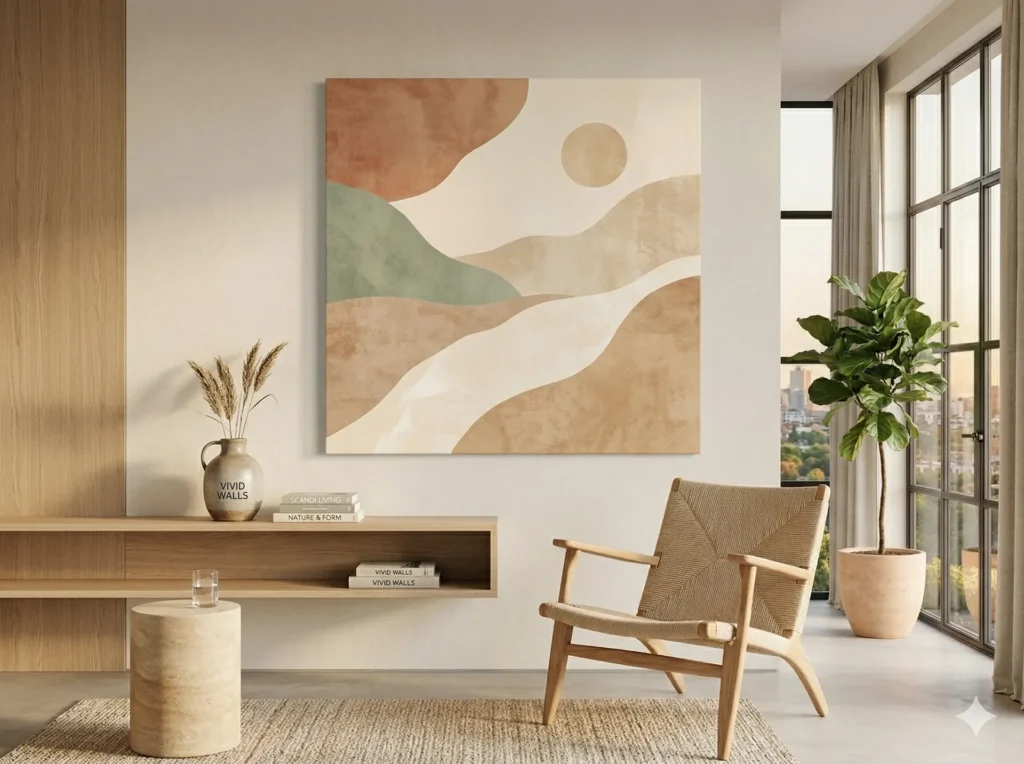
The same canvas that lifts a living room can feel wrong in a bedroom - not because it’s the wrong art, but because each room asks something different of its walls. A little intention about subject, size and placement goes a long way. Here’s a room-by-room starting point, with styles that tend to work in each space.
Living room - make a statement
The living room is where wall art earns its keep, so this is the place to be bold. The wall above the sofa is the natural focal point: aim for one large piece or a set that spans two-thirds to three-quarters of the sofa’s width, hung 15-25 cm above the back.
Styles that work: confident abstracts for a modern, gallery feel; a sweeping landscape for calm and depth; a cityscape for energy. Wide walls are made for a five-panel set - a panoramic scene split across panels adds real movement above a large sofa.
Bedroom - calm and personal
Bedrooms reward restful subjects over busy ones. Above the bed, centre the art on the bed, not the wall, and keep it within the headboard’s width. Soft palettes settle a room for sleep.
Styles that work: muted botanical and floral pieces, gentle nature scenes, and calm abstracts in quiet tones. A single well-chosen canvas usually beats a busy arrangement here - the bedroom is one room where less really is more.
Home office - focus with personality
A workspace wants art that’s interesting without being distracting - something that rewards a glance between tasks. The wall behind or beside the desk (in view on a video call, ideally tidy) is prime real estate.
Styles that work: structured abstracts and architecture for a sharp, motivating feel; vintage and retro prints for character. A single piece at eye level keeps the space focused; a small trio can add interest to a wider desk wall.
Hallway & stairs - guide the eye
Hallways are narrow and often overlooked, which makes them a lovely place for a considered series. A run of smaller canvases (30-50 cm) at a steady eye level draws you along the space, and a stairwell suits art stepped to follow the rise.
Styles that work: a set of photography or wildlife prints, a themed collection, or a family of black-and-white images for cohesion. Keep sizes modest so the space doesn’t feel cramped.
Kitchen & dining - warm and inviting
Kitchens and dining areas suit art that feels warm and appetising without competing with the room. Choose a drier, well-ventilated wall away from the hob and sink, and let one confident piece do the work.
Styles that work: botanical prints, warm-toned abstracts, and characterful vintage pieces. Over a dining table, a single larger canvas centred on the table anchors the whole setting.
Room-by-room at a glance
| Room | Mood | Styles that suit it |
|---|---|---|
| Living room | Bold, social | Abstract, landscape, cityscape, panel sets |
| Bedroom | Calm, personal | Botanical, soft nature, quiet abstract |
| Home office | Focused, characterful | Abstract, architecture, vintage |
| Hallway / stairs | Flowing, curated | Photography, wildlife, themed series |
| Kitchen / dining | Warm, inviting | Botanical, warm abstract, vintage |
Three ideas that work in any room
- Echo a colour already in the room - pull one accent from a cushion, rug or plant into the art, and the piece instantly looks intentional.
- Match the shape to the wall - landscape for wide walls, portrait for tall gaps, square to anchor a gallery arrangement.
- Go one size up on empty walls - under-sizing is the most common mistake; a slightly larger canvas nearly always looks more considered.
Find yours
Browse by style across the full range of canvas prints, choose a clean single piece or a wide panel set, and use our size guide to land the right dimensions for each wall. Printing your own image? Get in touch for a custom size up to 170 × 500 cm.
Frequently asked questions
What size canvas should go above a bed?
Keep the art within the width of the headboard and centre it on the bed rather than on the wall. A single piece around two-thirds of the bed width usually looks right.
Should the art match my sofa or wall colour?
Matching tends to look flat. Echoing works better: pull one colour that already exists in the room - a cushion, a rug, a plant - and let the rest of the piece contrast.
How do I choose art for a rented flat?
Canvas is the easy answer because it is light. A stretched canvas weighs far less than the same size behind glass, which puts adhesive hooks and picture strips genuinely in play instead of drilling.
Portrait or landscape orientation?
Let the wall decide. Landscape suits wide walls and anything above a sofa or sideboard; portrait fills tall narrow gaps and works between windows or doors; square anchors a gallery arrangement.
How many pieces should a gallery wall have?
An odd number reads more naturally - three or five. Keep the spacing consistent and treat the whole arrangement as one rectangle when you are working out where it sits on the wall.
Shop this guide
Shop wall art

Songbird & Rose Sonata


The Long Shadow


Radiant Burst


Red Node Convergence
Read next

Stretcher Bar Profiles & Why Canvas Depth Matters
What canvas depth means and how stretcher bar profiles change the look - from slim standard bars to deep 3D gallery-wrap edges. Made in the EU.

How to Care for a Canvas Print (and Keep Colours Vibrant)
How to clean and care for a canvas print: dry dusting, what to avoid, sunlight and damp, and keeping colours vibrant for years. Made in the…

Turn Your Own Photo Into Canvas: Resolution, Files & Tips
Printing your own photo on canvas? The resolution you need, best file types, cropping tips and how large you can go. Custom sizes to 170x500 cm,…